
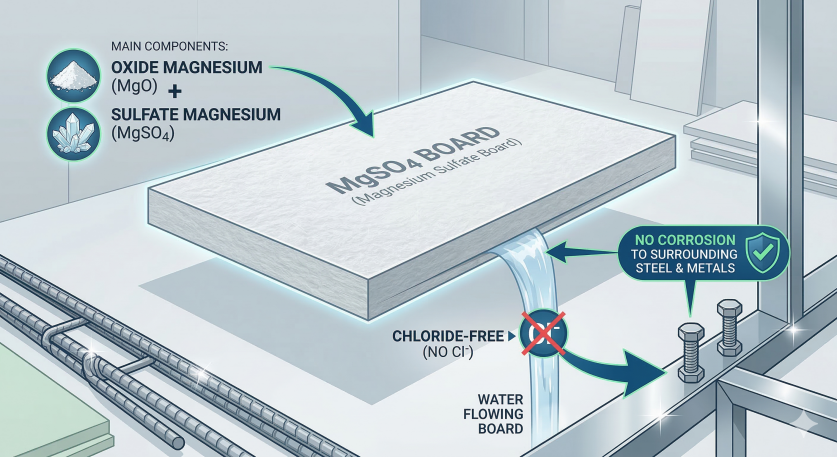
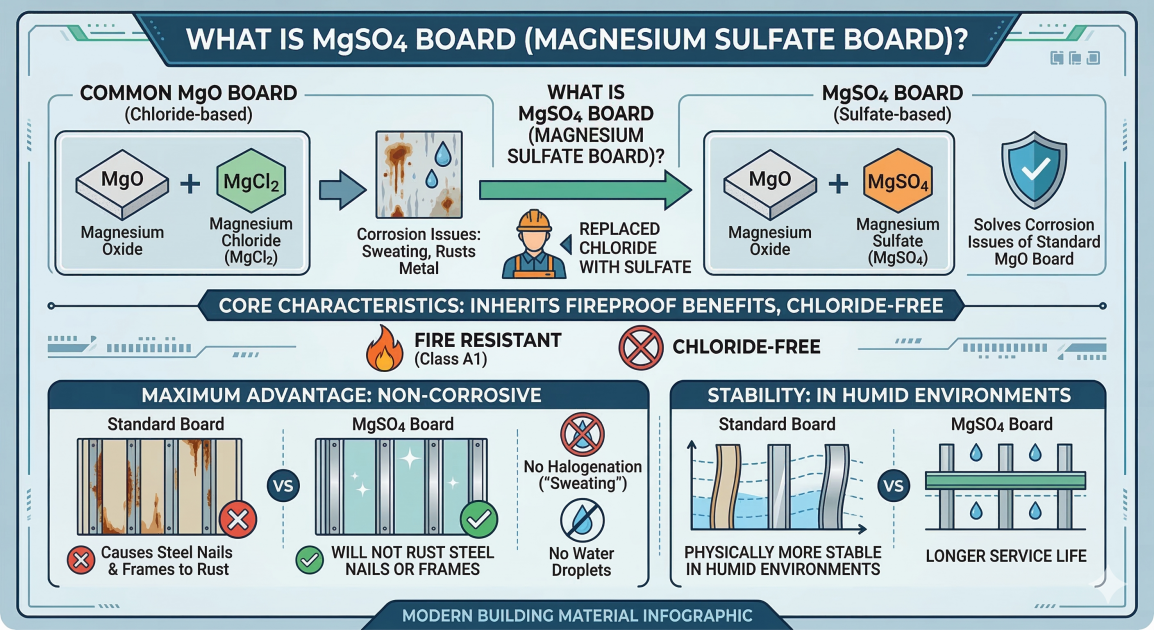
ကလိုရိုက်ပုံစံ၏ သေးငယ်သော အက်စစ်ဓာတ်ဖောက်ပွဲဖြစ်မှု ပြဿနာများကို ဖြေရှင်းရန်အတွက် ထုတ်လုပ်သူများသည် မဂ္ဂနီဆီယမ် ကလိုရိုက်ကို မဂ္ဂနီဆီယမ် ဆာလ်ဖိတ် (MgSO4) ဖြင့် အစားထိုးခဲ့ကြသည်။ ဤပုံစံကို အများအားဖြင့် ဆာလ်ဖိတ် MgO ဘုတ်ဟု ခေါ်ကြသည်။
အဓိက အင်္ဂါရပ်များ - ၎င်းသည် MgO ဘုတ်၏ မီးခိုးမှုကာကွယ်ရေး အက်ဒ်ဝန်တော်များကို ထိန်းသိမ်းထားပြီး ကလိုရိုက်မပါသော ပုံစံဖြစ်သည်။
အကောင်းဆုံး အားသာချက် - သေးငယ်သော အက်စစ်ဓာတ်ဖောက်ပွဲဖြစ်မှု မရှိခြင်း။ ၎င်းသည် သံမှုန်များ သို့မဟုတ် သံမှုန်အုတ်များကို ချေးမှုဖြစ်စေခြင်း မရှိပါ၊ အထူးသဖြင့် စိုထိုင်းမှုများများရှိသော အခြေအနေများတွင် ရေစိုခြင်း (sweat) သို့မဟုတ် ရေစိမ့်ဝင်ခြင်း (leach moisture) မဖြစ်စေပါ။
တည်ငြိမ်မှု - ၎င်းသည် စိုစွတ်သော အခြေအနေများတွင် ရုပ်ပိုင်းဆိုင်ရာအားဖြင့် ပိုမိုတည်ငြိမ်ပါသည်။ ခေတ်မှီ အဆောက်အဦးများတွင် အသုံးပြုရာတွင် အသက်တာကြာရှည်မှု ပိုမိုကောင်းမွန်ပါသည်။

Class A1 မီးမလောင်နိုင်သည့် အဆင့်သတ်မှတ်ချက်ကို ရရှိပါသည်။ မီးလောင်ကြောင်းဖြစ်ပါက မီးခွက်များ မျှော်လင့်ချက်မရှိသည့်အတိုင်း မျှော်လင့်ချက်မရှိသည့်အတိုင်း မီးခွက်များ မျှော်လင့်ချက်မရှိသည့်အတိုင်း မီးခွက်များ မျှော်လင့်ချက်မရှိသည့်အတိုင်း မီးခွက်များ မျှော်လင့်ချက်မရှိသည့်အတိုင်း မီးခွက်များ မျှော်လင့်ချက်မရှိသည့်အတိုင်း မီးခွက်များ မျှော်လင့်ချက်မရှိသည့်အတိုင်း မီးခွက်များ မျှော်လင့်ချက်မရှိသည့်အတိုင်း မီးခွက်များ မျှော်လင့်ချက်မရှိသည့်အတိုင်း မီးခွက်များ မျ......

ရေနှင့် စိုထိုင်းမှုကို အထူးသဖြင့် ခံနိုင်ရည်ရှိပါသည်။ ရေစိမ့်ဝင်မှုကို ထိရောက်စွာ ကာကွယ်ပေးပြီး ရေးလေးသည့် ရာသီဥတုများ သို့မဟုတ် စိုထိုင်းမှုများများသည့် ပတ်ဝန်းကျင်များတွင်ပါ မှိုများ သို့မဟုတ် မှိုများ ပေါက်ပွားမှုကို ကာကွယ်ပေးပါသည်။

သဘောတော်များနှင့် အဆိပ်အတောက်မရှိသည့် ပစ္စည်းများဖြင့် ပြုလုပ်ထားပါသည် (ဖော်မေလ်ဒီဟိုင်း ထုတ်လွှတ်မှုနည်းသည်)။ ဤပစ္စည်း၏ ကာဗွန်အောက်ဆိုဒ် အနေဖြင့် စီမင့်နှင့်ကဲ့သို့သည့် ရှေးရိုးစွဲ အဆောက်အဦးပစ္စည်းများထက် သိသိသာသာ နည်းပါသည်။ ထို့ကြောင့် ဤပစ္စည်းသည် အမှန်တကယ် ရေရှည်တည်တံ့သည့် ရွေးချယ်မှုဖြစ်ပါသည်။

အထူးသဖြင့် အဆောက်အဦးအတွက် အားကောင်းမှုနှင့် ထိခိုက်မှုကို ခံနိုင်ရည်ရှိမှုကို ပေးစေပါသည်။ မှုန်းမှုန်းမှုန်းမှုန်းမှုန်းမှုန်းမှုန်းမှုန်းမှုန်းမှုန်းမှုန်းမှုန်းမှုန်းမှုန်းမှုန်းမှုန်းမှုန်းမှုန်းမှုန်းမှုန်းမှုန်းမှုန်းမှုန်းမှုန်းမှုန်းမှုန်းမှုန်းမှုန်းမှုန်းမှုန်းမှုန်းမှုန်းမှုန်းမှုန်းမှုန်းမှုန်းမှုန်းမှုန်းမှုန်းမှုန်းမှုန်းမှုန်းမှုန်းမှုန်းမှုန်းမှုန်းမှုန်းမှုန်းမှုန်းမှုန်းမှ......

အလွန်မှ ကြိုတင်ထုတ်လုပ်ထားသော ပစ္စည်းဖြစ်ပြီး ဖြတ်ရန်နှင့် တပ်ဆင်ရန် လွယ်ကူပါသည်။ ဤပစ္စည်းသည် အလေးချိန်နည်းသော သံမဏိ နှင့် သစ်သား အဆောက်အဦးအတွက် အသုံးများသော စနစ်များနှင့် အလုံးစုံ သဟဇាឤ ရှိပါသည်။ ထို့ကြောင့် အဆောက်အဦး တည်ဆောက်မှုအချိန်နှင့် အလုပ်သမားစရိတ်များကို သိသိသာသာ လျော့နည်းစေပါသည်။

၎င်း၏ သိပ်သည်းဆမြင့်မားမှုနှင့် ခိုင်မာသော ဖွဲ့စည်းပုံကြောင့် အသံကာကွယ်မှု အထူးကောင်းမွန်ပါသည်။ အခန်းများအကြား သို့မဟုတ် အပြင်မှ အသံလွှင့်ပေးမှုကို ထိရောက်စွာ လျော့နည်းစေပါသည်။ ထို့ကြောင့် အတွင်းပိုင်း ပတ်ဝန်းကျင်သည် ပိုမိုတိတ်ဆိတ်ပြီး အ Comfortable ဖြစ်လာပါသည်။
ဒီနှစ်များသည် အောက်ပါအမျိုးအစားများတွင် ပါဝင်ပါသည်။ မဂ္ဂနီزيယံ 옥サイด์ ဘုတ် မက်ဂနီဆီယာ ဘုတ်များအဖြစ် မှုန်းမှုန်းခေါ်ဆိုလေ့ရှိသည်။ MgO ဘုတ်များ သို့မဟုတ် မက်ဂနီဆီယာ ဘုတ်များ ၎င်းတို့သည် ပုံပန်းသဏ္ဍာန်အားဖြင့် ဆင်တူသော်လည်း ၎င်းတို့၏ ဓာတုဖော်မူလာများနှင့် စွမ်းဆောင်ရည် အင်ဂျင်နီယာများ—အထူးသဖြင့် စိုထိုင်းမှုနှင့် ပတ်သက်သည့် အချက်များ—သည် အတော်လေး ကွဲပါးခြားနားပါသည်။
| Feature | MgO Board (Chloride-based) | MgSO4 Board (Sulfate-based) |
|---|---|---|
| Main Ingredients | MgO + MgCl₂ | MgO + MgSO₄ |
| Corrosiveness | High (corrodes metal fasteners) | None (Safe for metals) |
| "Sweating" Risk | High in humid areas | None (Stays dry) |
| Strength | Very High | High (slightly lower than Chloride) |
| Cost | More affordable | Higher |
| Best Use Case | Dry indoor areas, temporary walls | High-end fire doors, steel structures, humid climates |

ကော်ပီရော့တ် © ၂၀၂၄ JINTEMEI Fire Proof Board Factory
 EN
EN